Join us for our latest community talks hosting researchers from Canterbury who are advancing and improving health for us all.
We have two incredible researchers talking about their research which is relevant to us all, yet not often talked about – the risk of heart failure and the end of life.
Come along and learn more about the relationship between our gut and our heart, and some of the myths around dying and palliative care.
Meet our Speakers:
Can your gut bacteria predict heart failure after a heart attack?
Survivors of heart attacks face a high risk of subsequently developing heart failure. Sarah’s research is exploring an emerging research area involving the gut microbiome — the community of bacteria living in our gut — and how this might help to predict which patients are most at risk. After a heart attack, the gut barrier can weaken, leading to a “leaky gut” that lets bacterial DNA and enter the bloodstream. This may trigger inflammation that further harms the heart.
Her work examines markers in gut bacteria that could signal who is most likely to develop heart failure before symptoms appear. This research could lead to earlier diagnosis, personalised treatments, and new approaches that improve gut health to help protect the heart, as well as inform lifestyle or therapeutic strategies to reduce risk.
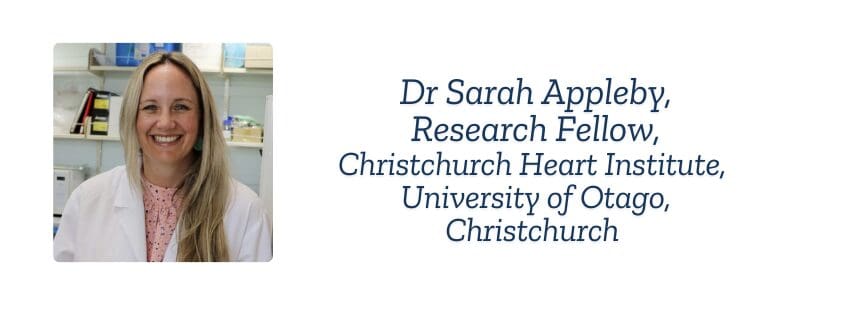
Sarah Appleby is a Research Fellow at the Christchurch Heart Institute. She investigates cell-free DNA as a source of new biomarkers in cardiovascular disease, with a focus on understanding how the gut–heart connection can help predict and prevent heart failure after a heart attack.
Demystifying dying
Death is normal, natural and comes to us all. Amanda’s talk explains what happens within the body when it is dying, palliative care and some of the myths around it. Understanding the normal signs and symptoms of a dying body can help prepare patients and families facing life-limiting illness, and shed fear around this inevitable life event.
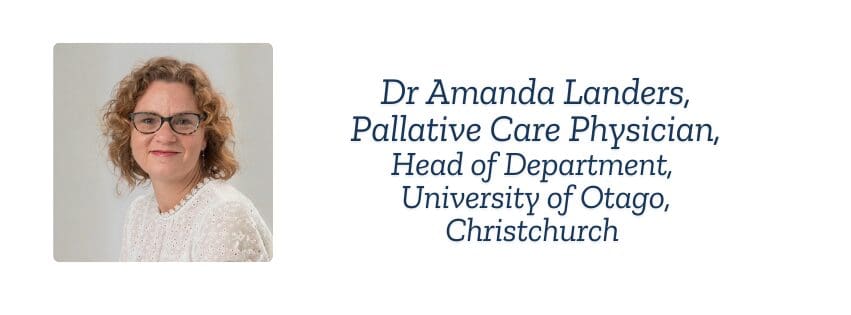
Amanda is the Head of the Department of Medicine at the University of Otago Christchurch, and a palliative care physician with clinical experience across New Zealand and Australia. Amanda is responsible for Palliative and End-of-Life Care at the Otago Medical School, contributing extensively to teaching and research in this field.