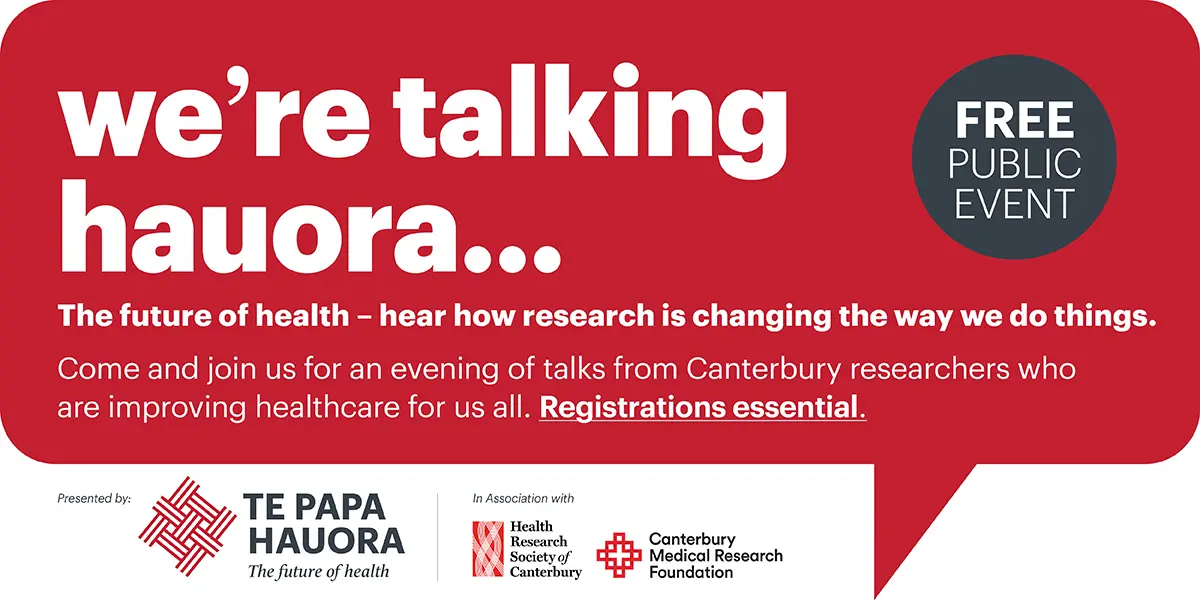
We are thrilled to introduce eight impressive researchers this year for our popular talks this year. Doors open at 5pm, talks begin at 5.30pm. We look forward to seeing you there.
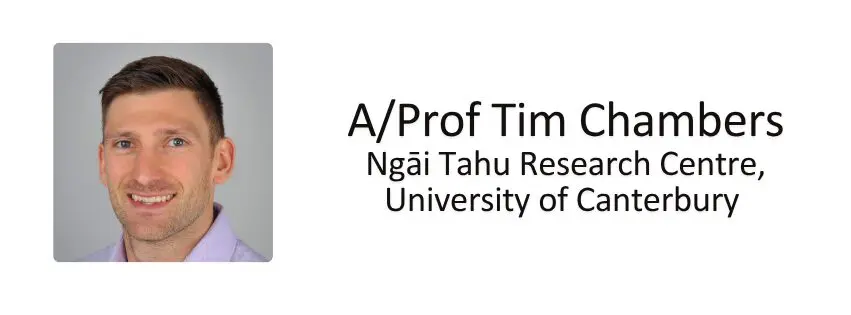
Drinking water quality: Implications for our health
Good quality water, free of contaminants is essential to human life and a fundamental human right. It is a key element of the 2030 United Nations Sustainable Development Goals. Unfortunately, water contamination in New Zealand has had severe consequences for human health.
In this talk, Tim will outline his team’s research on drinking water quality and public health in New Zealand. Tim will share research from various studies including the association between nitrate contamination in drinking water and preterm birth, a national assessment of the burden of disease attributable to community water supplies and the effectiveness of community water fluoridation on oral health.
Tim is a Fulbright Scholar (Harvard University) and Associate Professor in the Ngāi Tahu Research Centre. His research interests include environmental health and infectious diseases. Tim’s current research investigates the potential health burden of drinking water contamination, with a focus on nitrate contamination.
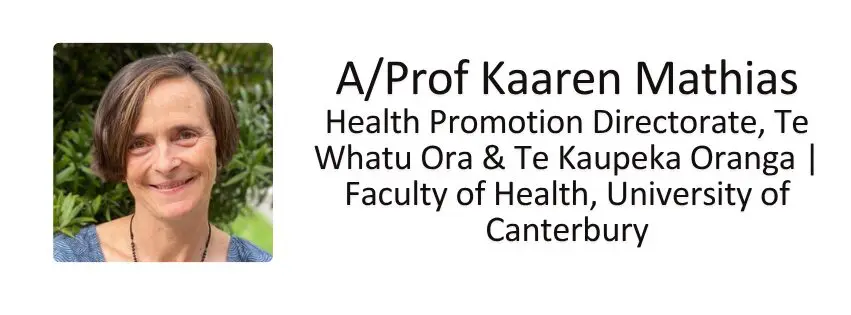
Nothing about us without us: Participatory research in youth mental health
Youth mental health research receives just a small fraction of research health funding and most research about young people doesn’t include young people.
After presenting research examining funding allocated to youth mental health research, Kaaren and her team describe a research project that examines what is working well in youth-focussed primary health care and how young people participate in research governance, design, implementation and analysis. This ensures that the care is relevant to young people and is acceptable and able to be implemented.
Kaaren is a public health physician with a research focus on youth health, mental health promotion and equity. She is the national Clinical director of Health promotion with Te Whatu Ora and Associate Professor of public health and social justice at the Faculty of Health, University of Canterbury.

Assisted dying: Practitioner perspectives
Assisted dying is now legal in New Zealand, giving eligible people the option to choose the timing of their death under strict conditions. This has brought important changes to healthcare and raised questions for both health professionals and the public.
Heather will talk about how health practitioners feel about assisted dying, including those who provide it and those who choose not to.
Heather is an oncology Clinical Nurse Specialist for Health New Zealand, a Senior Clinical Educator at the University of Canterbury, and Nurse Lecturer at Ara Institute of Canterbury. She is also a doctoral candidate, with a strong interest in how healthcare professionals navigate this ethically complex health service.
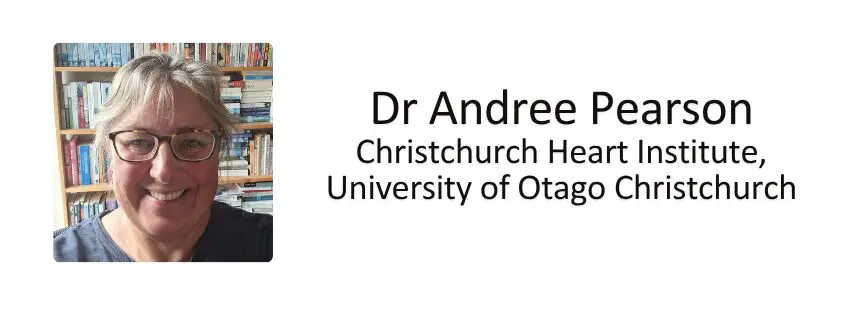
Strong hearts, Strong whānau: Insights from Hauora Manawa mō ngā Kaumātua me ngā Whānau
The Hauora Manawa mō ngā Kaumātua me ngā Whānau study is exploring how age and ethnicity influence heart structure and function in Māori. Andree and her research team are investigating how well common clinical tests for heart disease work for Māori. Many of the reference ranges used to diagnose heart conditions are based on large European populations. This research aims to understand whether these tests are working as well as they should for Māori.
Study clinics have been held at local marae, where the kaupapa has been warmly received by participants and has resulted in strong community engagement. The study is a great example of the high level of engagement of Māori in health services when they are provided in a space that is safe and familiar.
Andree is a Research Fellow with the Christchurch Heart Institute and is particularly interested in how ethnicity contributes to differences in cardiac biomarkers. She is also very much enjoying working in the community alongside people who really want to make a difference to the inequity that exists around heart disease in New Zealand.
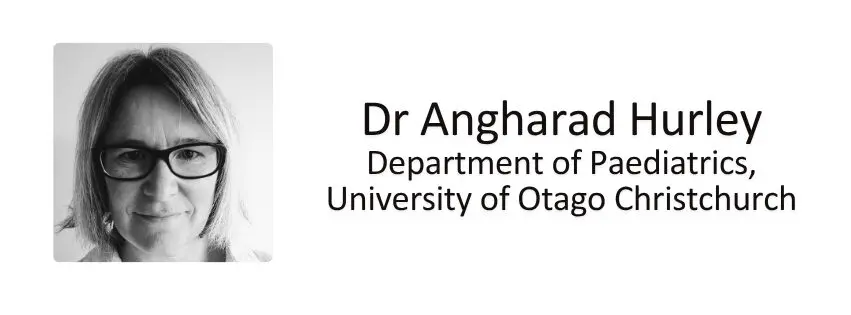
Caring for our children: a deep dive into Emergency Department presentations to Christchurch Hospital
Little is known whether factors such as ethnicity, socio-economic deprivation, and rural living, effect which children present to the Emergency Department. We also don’t know if these factors have an effect on what happens while they’re there, or their health outcomes.
Angharad is taking a deep dive into a year’s worth of data on all children that presented to the Emergency Department at Christchurch Hospital to answer these questions. In this talk she will share some of these findings and what the implications are for provision of care for children in Canterbury.
Angharad started out as a paediatric nurse and then morphed into a researcher. She currently focuses on gastroenterology conditions among children in the South Island, and her main work is studying emergency department presentations for children at Christchurch Hospital.
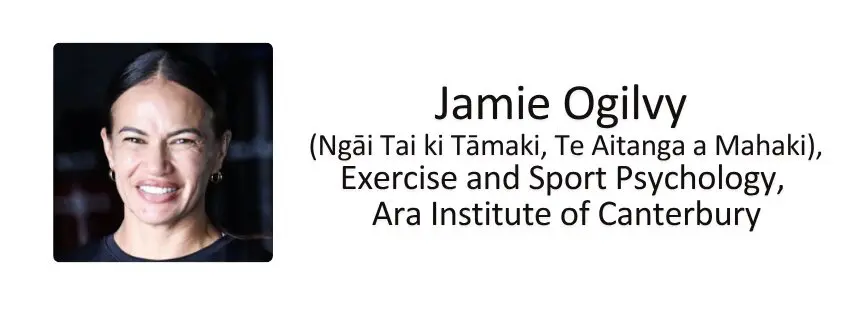
How exercise extends beyond the physical for wāhine Māori
Weightlifting is often understood as a sport centred on strength and performance. However, for wāhine Māori, it can also be a meaningful space where identity, connection, and wellbeing are experienced in deeply relational ways.
Drawing on research by and with wāhine Māori weightlifters, Jamie will share how participation in the gym extends far beyond the physical. For many, weightlifting becomes a pathway for confidence, self-development, and a strong sense of belonging. These environments can foster whanaungatanga, where relationships are built, and experiences of challenge, growth, and support are shared collectively.
Jamie’s PhD research sits within a Marsden-funded project that centres on Indigenous and feminist approaches to rethinking sport and movement for development. Drawing on both academic research and lived experience as a coach and athlete, Jamie is passionate about creating strength-based environments that support confidence, connection, and holistic hauora for women and girls.
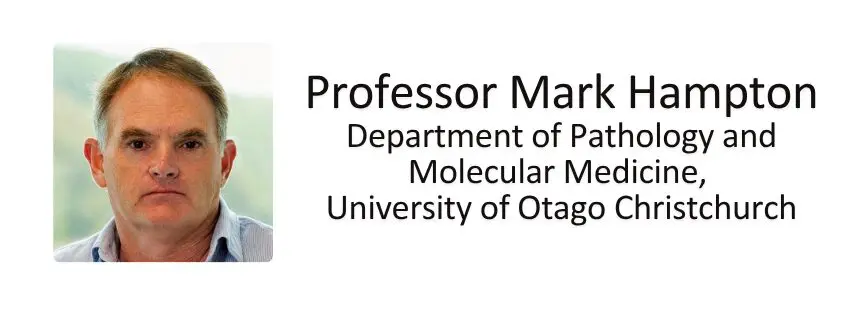
The breath of life: how oxygen shapes how fast we age
Every breath we take not only sustains life but influences how fast we age. Oxygen travels from our lungs into the bloodstream, carried by red blood cells to every tissue in the body. Inside our cells, mitochondria use this oxygen to generate the energy that powers life.
That process comes at a cost. The use of oxygen generates reactive by-products that damage mitochondria. As we age, this stress builds up, disrupting normal cell function. Our work within the longitudinal Dunedin Multidisciplinary Health and Development Study shows that signs of mitochondrial stress are already present in midlife in individuals ageing faster than their peers.
In this talk, Mark will explore how the journey of oxygen through the body shapes ageing, and how emerging research is uncovering ways to enhance the clearance of damaged mitochondria to reduce the impact of age-related disease and extend healthspan.
Mark is a biomedical researcher at the University of Otago, Christchurch and leads the Mātai Hāora – Centre for Redox Biology and Medicine.
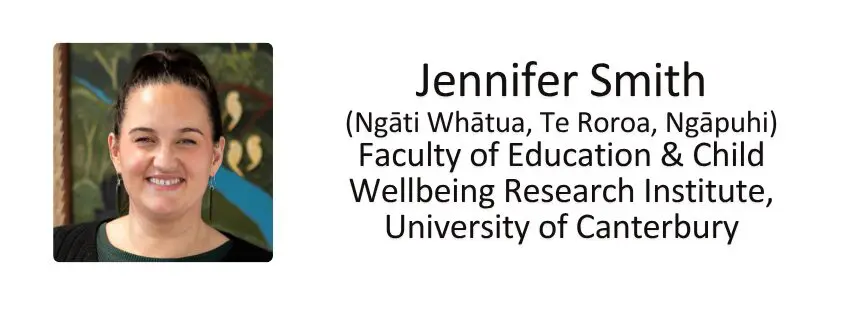
A Window to the Outside World: What rangatahi young people say about media and wellbeing
Across Aotearoa New Zealand, young people’s media use is under increasing scrutiny – from school phone bans to proposals restricting social media access. These responses often focus on what’s not working for young people. But what do rangatahi themselves say?
Drawing on research with minority youth in Aotearoa New Zealand, Jen’s presentation shares how media can support connection, identity, learning, and wellbeing. Rather than focusing only on risk and harm, this presentation opens space to consider the realities rangatahi are navigating, and how we, young people, parents, professionals, and researchers, might begin to balance these discussions, moving us forward together in this evolving digital landscape.
Jen (Ngāti Whātua, Te Roroa, Ngāpuhi) is a senior lecturer in Māori education in the Faculty of Education at the University of Canterbury. Jen also leads Culturally Responsive Education in Te Kāhui Pā Harakeke, the Child Wellbeing Research Institute at the University.