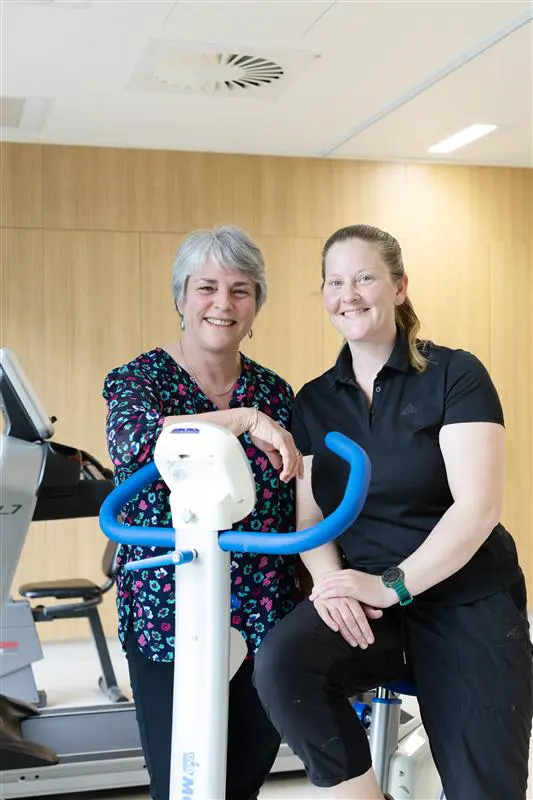
Adapted from He Kitenga 2025 University of Otago Research Highlights
A new collaborative is set to get cancer patients “up and moving” to boost their recovery and treatment outcomes.
Internationally, evidence is building that personalised exercise programmes not only build confidence and well-being for patients undergoing cancer treatment, but also alleviate treatment-related side effects and, quite possibly, lift survival rates.
It’s evidence cancer researcher Associate Professor Marg Currie, from the Department of Pathology and Molecular Medicine’s McKenzie Cancer Research Group, believes is too compelling to ignore.
“Worldwide, the body of clinical research backing exercise as an important addition to cancer treatment is now so strong, we here in Aotearoa really need to sit up and take note,” Associate Professor Currie says.
“Currently, New Zealanders undergoing treatment for cancer are failing to meet international standards for exercise post-diagnosis and are therefore missing out on an integral part of their cancer care, hence why our group has decided to act”.
Their group is called Exercise Oncology Aotearoa (EOA), and was established to champion the use of personalised exercise – “exercise oncology” – as an integral part of cancer care nationwide.
Formed last year and now operating under the umbrella of the Christchurch Health Precinct -Te Papa Hauora, EOA has a clear set of goals. It aims to establish exercise programmes that prepare individuals for an optimal pathway in advance of their surgery and/or cancer treatment, and help individuals build resilience to optimise recovery from surgery and/or treatment.
EOA has a Steering Group – Chaired by Associate Professor Marg Currie – including exercise physiologist Dr Jess Allan (University of Canterbury), exercise physiology researcher Professor Nick Draper (University of Canterbury), palliative care co-ordinator Dr Kate Reid (University of Canterbury), Medical Oncologist Dr Alice Loft (Health NZ Christchurch), and recently-retired Medical Oncologist and University of Otago Faculty of Medicine Professor Emerita Bridget Robinson.
It also boasts an Advisory Committee and wider multidisciplinary team of oncologists, surgeons, cancer nurses, exercise physiologists, cancer care providers and cancer researchers.
“We still have so much to learn and many questions to answer,” Associate Professor Currie admits.
“We know that with exercise, one size does not fit all, so how do we ‘prescribe’ exercise programmes effectively before, during and after treatment, and then tailor them to maximise benefit for people with different cancer types and stages?”.
“Our ultimate goal is to expand our collaborative into a Centre of Excellence, providing personalised exercise prescriptions, specialist physiotherapy treatment, nutritional advice, psychological support and health navigators to help guide patients through their treatment plans,” Associate Professor Currie says.
The message is simple: exercise can play an important role in helping people feel better and recover better from cancer.